
At the end of this online course, you will:
Learning objectives
1. KEY TOOLS
Contribute in an informed way to public discussions concerning the planning and redevelopment of post-conflict societies such as Ukraine, with background knowledge of key tools and the challenges of their application in the realm of urban and housing policy.
2. POLICY DESIGN
Make more informed policy and design judgments that are integrated across urban development sectors, is evidence based, and participative.
3. INTEGRATED PLANNING
Integrate the decisions made during planning and design into more extensive and coordinated spatial plans for reconstructions
4. VISIONING
Facilitate visioning activities with members of the public, local governments, businesses, and the civil society in order to establish integrated, sustainable, and inclusive strategies.
Organisation
Organisation
This course is held online organised by the Department of Urbanism in the Faculty of Architecture and the Built Environment at the TU Delft. It lasts for three months and consists of seven sessions, each of which lasts for two hours. The instructors for this class come from a variety of universities and institutions and are highly regarded in their fields. The course will be taught in English. View more
Perspective
The interwoven nature of today’s urban challenges requires integrated comprehensive solutions that are founded on good governance. Urban policy, strategy and spatial interventions must be evidence based, participatory and inclusive. The UN’s SDGs offer such an integrated framework, with goals with targets to be reached by 2030. Yet while many countries have committed to these, conflict and war make their attainment much more difficult.
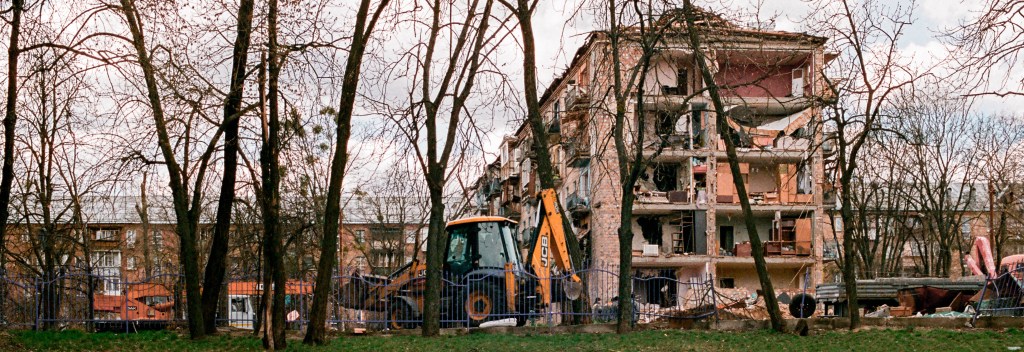
The ongoing war against Ukraine and its own plans for reconstruction provide a focus case for this course.
The course
This course will seek to discuss spatial strategies for an integrated urban recovery in post-conflict settings. The course investigates the process of reconstruction and what “building back better” implies: tackling inequalities, strengthening the capacities of local actors and pursuing a green, resilient and inclusive economic recovery anchored on sound spatial planning, design and policy. It focuses on practical tools of spatial planning and strategy-making, land and resettlement policy, building and planning standards for climate adaptation and decarbonisation, policies and programs for ensuring the development of adequate (re)housing, as well as mechanisms to ensure fairness, participation and transparency throughout the urban recovery and reconstruction phase.
The course will examine lessons from previous approaches to reconstruction such as the Marshall Plan and examine the differing roles of stakeholders, including national governments, spatial planning bodies, reconstruction banks and international donors, as well as municipal governments, civil society groups and NGOs. Specific attention will be given to strategic spatial planning, land resettlement, infrastructure financing and development, neighbourhood planning and systems of affordable housing provision. Insights from this course will empower emerging and reskilling policy makers, planners, investors, developers and architects to address the pressing concerns of urban reconstruction.
 Tools for Post Conflict Urban Recovery