Dr. Alexander Wandl, Section Environmental Technology and Design, TU Delft
Ukrainian Commentator: Roman Puchko, Co-Founder and CEO of ReThink

S3 Learning objectives
At the end of this session, you will be able to:
1. distinguish the differences between re-use, circular and regenerative design principles;
2. identify different leverage points in developing a circular neighbourhood or region from different starting points related to the physical environment, essential flow, citizen behaviour or economic activities.
3. apply a systemic section to (i)analyse the current relations between essential flows and spatial qualities and (ii) design an alternative applying circular and regenerative design principles
Summary
Circularity has become ubiquitous in recent urban (re-)development strategies. Nevertheless, three major gaps can be identified; the first is that proposals/strategies stay in the realm of recycling and focus on avoiding waste instead of transitioning to regenerative approaches. The second is that proposals for the built environment often stay on the material level of the construction and deconstruction sector, ignoring the other roles the built environment plays in an integrated circularity transition. The third is that discussion about spatial quality is lacking as the discussion stays on the level of business plans and industrial processes. In this session, students will learn the theoretical foundations and design approaches and principles to avoid all three issues.
Educational methods
Preparation: Videos on systemic design and systemic design tools (20 minutes) and preparation of a systemic section for the status quo.
Before the session you must watch the videos.
Theory of Systemic Design
- Analysis Methods of Systemic Design
- Design Methods of Systemic Design
Lecture: Three economies and their design tools (20 minutes).
Exercise: Developing systemic sections of a future more circular situation.
Resources
- Furlan, C., Wandl, A., Cavalieri, C., & Unceta, P. M. (2022). Territorialising Circularity. In L. Amenta, M. Russo, & A. van Timmeren (Eds.), Regenerative Territories: Dimensions of Circularity for Healthy Metabolisms (pp. 31-49). (GeoJournal Library; Vol. 128). Springer Science+Business Media. https://doi.org/10.1007/978-3-030-78536-9_2 https://pure.tudelft.nl/ws/portalfiles/portal/112782621/Furlan2022_Chapter_TerritorialisingCircularity.pdf
- Flows in Neighbourhood and City Scale – TU Delft OCW
Contributors
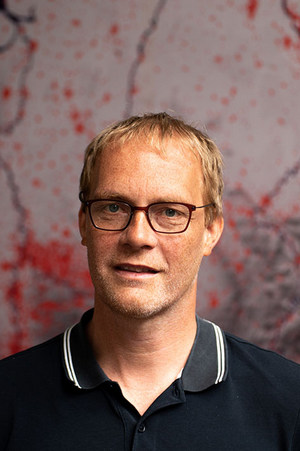
Dr. Alexander Wandl is an Associate Professor at the Chair of Environmental Technology and Design, at the Faculty of Architecture and the Built Environment, Delft University of Technology. His research focuses on sustainable urbanization, using an extended territorial metabolism approach and integrating (GIS-supported) methods and tools from different disciplines. As scientific coordinator of the Horizon 2020 research project REPAiR—Resource Management in Peri-urban Areas—he is at the forefront of developing spatial strategies that support the transition towards more circularity. He specifically focuses on the challenges related to the sustainable development of dispersed urban areas and peri-urbanization processes in Europe.

Roman Puchko is a Co-Founder and CEO of ReThink – a circular economy and green innovations NGO, based in Kyiv, Ukraine. ReThink is known for its dedication to pre-cycling and circular design (free water refill in Kyiv; circular economy hackathons organizer; driver for circularity in built environment). Roman holds an MSc degree from Wageningen University in Management, Economics, and Consumer Studies (2011) and has completed a course on Circular Cities at the University of Amsterdam (2019). He has been a member of Innovations development council under the Prime Minister of Ukraine. Roman is also an evaluator of the USF Calls (within Energy & Environment sectors). Since 2019, a special focus for ReThink is dedicated to the topic of circular cities and circularity in the built environment, since they do realize that if cities don’t become circular – everything else won’t matter in our journey towards climate neutrality. As Ukraine has to be rebuilt after the war in a better & greener way, ReThink understands everyone has to work even harder to ensure Ukrainian cities & municipalities (together with private sector) adopt the most advanced circular strategies on different levels.
 Tools for Post Conflict Urban Recovery