
Dr. Julia Wesely, Independent Researcher
Ukrainian Commentators: Vita Shnaider, anthropologist.


S7 Learning Objectives
At the end of this session, you will be able to:
1. Diagnose socio-environmental injustices in terms of the lack of or mal-distribution of good and resources; reciprocal recognition of people and their intersectional identities; and parity political participation;
2. Reflect through case studies on a portfolio of urban recovery approaches that seek to redress these socio-environmental injustices and how they might resonate with their own experiences;
3. Critically evaluate the roles of different knowledges in these approaches – with a focus on knowledges generated by organised civil society – and how they are mobilised and valued.
Summary
The United Nations Environmental Programme’s post-conflict country reports have consistently shown the devastating impacts of armed conflicts, often in combination with climatic and other crises, on natural resources and infrastructures that are critical to our lives – from cutting access to adequate water and sanitation, to demolishing crops and agricultural land, to military-origin environmental contamination. These impacts, as well as policy responses to alleviate them, are not evenly distributed. Rather, they often exacerbate pre-existing socio-environmental injustices, for example, in access to, and control over, land, energy, and healthy environments. In very simple terms: who gets to eat, drink, heat, move, etc how, where, and based on whose decisions, are key socio-environmental questions with repercussions for building more just and equal urban areas.
In this session, we will work with a feminist political ecology lens to diagnose socio-environmental injustices and how they affect people with different intersectional identities (e.g. gender, age, physical abilities) in different ways. We will then explore case studies from planning approaches to redress injustices through urban recovery, paying particular attention to the ways in which different knowledges are being mobilised and valued (or not) by civil society, private and public sector actors for different purposes.
Educational methods
This session will be divided into two parts: It first starts with a short input lecture to present core elements of environmental justice frameworks, and contextualise them through case studies. After a brief plenary discussion, we will be working in smaller groups to map and exchange different experiences and examples brought by participants. The aim of this discussion is to identify how different dimensions of socio-environmental injustices are manifested, and provoke particularly questions of gendered power relations.
Literature
- Svarstad, H., & Benjaminsen, T. A. (2020). Reading radical environmental justice through a political ecology lens. Geoforum, 108, 1-11.
[A very useful introductory paper, which outlines the dimensions of environmental justice and its interfaces with political ecology]
- Ramalho, J. (2020). Engendering disaster risk management and resilience-building: The significance of the everyday in evaluations of the exceptional. International Journal of Disaster Risk Reduction, 50, 101830.
[This paper, which draws from fieldwork in the Philippines, is interesting as it uses a feminist political ecology to argue for valuing the everyday (gendered and often unrecognised labour) vis-à-vis exceptional disaster risk management].
- Branch, A. & Martiniello, G. (2018). Charcoal Power: The Political Violence of Non-Fossil Fuel in Uganda. Geoforum, 97, 242–52.
[This paper discusses how charcoal as an energy source shapes political power (and vice versa) through an in-depth study of charcoal extraction in post-war northern Uganda.]
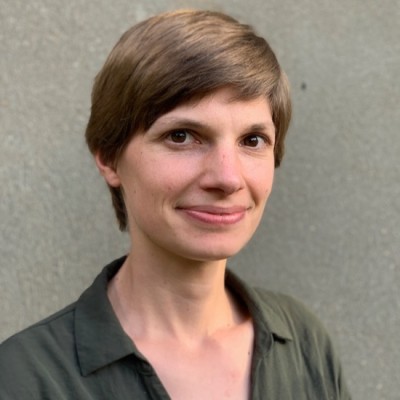
dr Julia Wesely is an independent researcher at the intersections of urban development, environmental justice, and critical pedagogies. She holds a BSc in Environment and Natural Resource Management from the University of Applied Life Sciences in Vienna and a MSc in Ecosystems, Governance and Globalisation from Stockholm University. She holds a PhD and a Post Doc by The Bartlett Development Planning Unit, UCL. Her PhD is titled Towards an enabling environment for integrated risk management: A case study of the city of Manizales in Colombia. Her Post-Doc was in the projects Knowledge in Action for Urban Equality (November 2018-March 2022; https://www.urban-know.com/wp5-education) and OVERDUE-Tackling the Sanitation Taboo Across Urban Africa (April-October 2022https://overdue-justsanitation.net).
Prior to starting her PhD, she gained research experience at the Sustainable Europe Research Institute in Vienna, where she was involved in projects dealing with climate change vulnerability and adaptation on community as well as European scale. She also worked at the Swiss Federal Institute for Forest, Snow and Landscape (WSL) in a project investigating Alpine disaster and hazard management.
Her current research interests lie in the integration of discussions around urban poverty and disaster management. Particularly, she wants to explore and highlight how different measurements of risk, vulnerability and poverty relate to local coping mechanisms of urban dwellers.
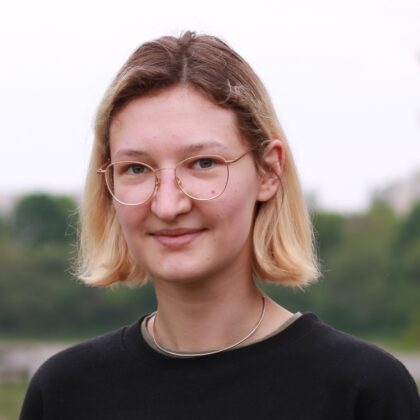
Vita Shnaider is Anthropologist, researcher of urban protest movements, with a MA Sociology and Social Anthropology (Central European University).
 Tools for Post Conflict Urban Recovery