

This course has 8 online sessions, always from 18:00 to 19:30 (CET: Central European Standard Time/ Amsterdam time), with the exception of Session 2, 12:00 to 13:30 (CET).
Sessions
S1: 15 MAY 2023 18:00-19:30 (CET) Approaches for long-term housing recovery
Dr. Julie Lawson, Adjunct Professor, centre for Urban Research, RMIT University, Melbourne, and Galyna Sukhomud, Group Crises, Conflict and Recovery at the European Netwark for Housing Research.
This lecture will consider the reconstruction of adequate long term housing in post conflict countries. It will make reference to past housing reconstruction efforts, with a focus on the Germany, Netherlands, Austria and Finland, and consider their key policy instruments, implementation challenges and outcomes.
S3: 29 MAY 2023 18:00-19:30 (CET) The circularity of the Built Environment a Systemic perspective
Dr. Alexander Wandl, Section Environmental Technology and Design, TU Delft.
Circularity has become ubiquitous in recent urban (re-)development strategies. Nevertheless, three major gaps can be identified; the first is that proposals/strategies stay in the realm of recycling and focus on avoiding waste instead of transitioning to regenerative approaches. The second is that proposals for the built environment often stay on the material level of the construction and deconstruction sector, ignoring the other roles the built environment plays in an integrated circularity transition. The third is that discussion about spatial quality is lacking as the discussion stays on the level of business plans and industrial processes.In this session, students will learn the theoretical foundations and design approaches and principles to avoid all three issues.
S5: 12 JUNE 2023 18:00-19:30 (CET) Spatial Justice & Participation
Dr. Caroline Newton, dr. Juliana Gonçalves, dr. Roberto Rocco, Spatial Planning and Strategy, TU Delft.
This session seeks to describe the concept of spatial justice and to unpack its implications for spatial planning and the role of planners in delivering just and inclusive cities and communities. It addresses spatial justice as a crucial dimension of sustainability, particularly of social sustainability. It explores ideas about participation in planning process and presents a critical analysis of instruments of participation around the world.
S7: 26 JUNE 2023 18:00-19:30 (CET) Re-dressing socio-environmental injustices through urban recovery
Dr. Julia Wesely, Independent researcher.
In this session, we will work with a feminist political ecology lens to diagnose socio-environmental injustices and how they affect people with different intersectional identities (e.g. gender, age, physical abilities) in different ways. We will then explore case studies from planning approaches to redress injustices through urban recovery, paying particular attention to the ways in which different knowledges are being mobilised and valued (or not) by civil society, private and public sector actors for different purposes.
S2: 22 MAY 2023 12:00-13:30 (CET) Community-led self recovery
Dr. Mittul Vahanvati, Senior lecturer, Centre for Urban Research, Sustainability and Urban Planning, RMIT University, Melbourne.
Community-led approach to housing and self-recovery are not new. Development practitioners and researchers have provided evidence of such practice in the Andean region of Latin America (Barakat, 2003) and in the informal settlements of Peru (Turner, 1976). In context of disasters/ crisis, this approach was mainstreamed in 1982, after the ‘Shelter after disasters’ (UNDRO 1982) report.
S4: 05 JUNE 2023 18:00-19:30 (CET) Superlocal toward a circular built environment
Dr. John van Oosrchot & Dr. Nurhan Abujidi, Smart Urban Redesign Research Centre, Zuyd University
This lecture addresses the following key research questions: Following the principles of a circular economy, what can be learned from recent ‘urban mining’ case studies? Which pre-conditions need to be in place to be able to implement circular construction practices? Which circular design concepts are relevant to the post-conflict reconstruction in for example Ukraine?
S6: 19 JUNE 2023 18:00-19:00 (CET) Design Tools for Resilient Residential Neighbourhoods
Dr. Nelson Mota, Associate Professor, Department of Architecture, TU Delft.
This module uncovers how social, economic and environmental factors are interrelated in the design of housing settlements. For this, the course dives into three key aspects that anyone involved in housing design should take into consideration: time, environment, and community. Each of these aspects will be examined through a specific design approach, respectively: (1) Incrementality: how dwelling environments should be able to accommodate growth and change through time. (2) Typology Mix: how design can be responsive to different patterns of inhabitation, aspirations and cultural backgrounds, creating inclusive dwelling environments.(3) Clustering: what methods and strategies can shape the association of dwelling units in order to create meaningful communities.
S8: 03 JULY 2023 18:00-19:30 (CET) Land policy as a tool for recovery
Dr. Julie Lawson,Adjunct Professor, centre for Urban Research, RMIT University, Melbourne.
This lecture concerns the links between property rights, planning and development outcomes via land policy instruments. These instruments include public land banking, land re-adjustment, conditional land leasing, land use zoning, land value capture and land taxation. Their use in post conflict reconstruction will be examined as well as contemporary illustrations of best European practices. Students will apply this via a practical group exercise which they will share via short presentations.
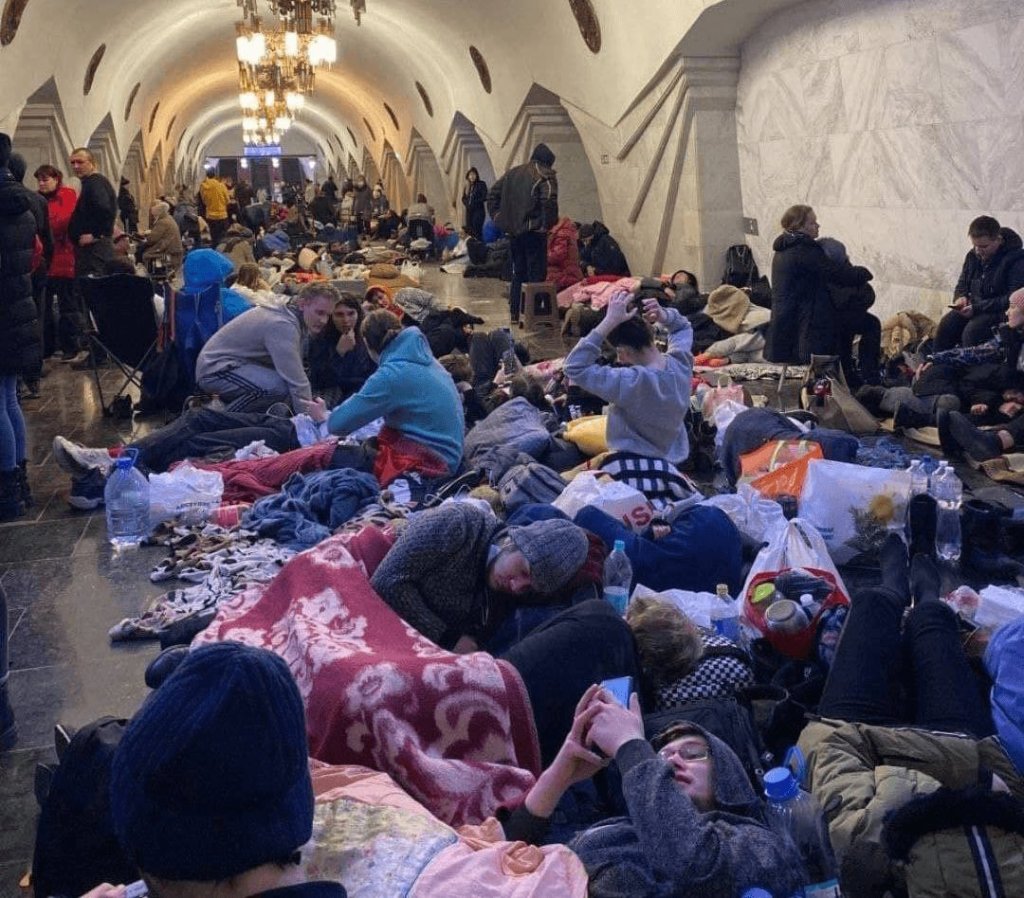
The war in Ukraine
Position of the Dutch government about the war in Ukraine
On 24 February 2022 Russia launched an attack on Ukraine. The Netherlands strongly condemns the Russian attack on Ukraine. It is an act of war for which Russia will pay a heavy price. The Netherlands is in close contact with the EU, NATO and other allies.View more

Ukraine – the Netherlands Urban Network
Ukraine – the Netherlands Urban Network is a growing community of Ukrainians in the Netherlands, Dutch architectural and spatial planning organisations and other spatial professionals who joined forces to exchange knowledge in the context of the reconstruction of Ukraine.View more
 Tools for Post Conflict Urban Recovery